Blog
-
Deploying FlowFuse with Docker on an Ubuntu server
With Node-RED's increasing role in IoT, FlowFuse Cloud has become a favored platform for deploying production Node-RED applications. It offers extensive features at a low cost, reducing operational overhead. However, the cloud is not the only option we provide; we also offer a self-hosted option for users who prefer to deploy FlowFuse on their servers. This guide demonstrates how to deploy FlowFuse on your Ubuntu server using Docker, covering key aspects such as domain setup, email, SSL, and more for real-world production scenarios
read more... -
Sign up for our monthly email updates:
-
Calling a Python script from Node-RED (2026)
Python's robust data processing capabilities and extensive libraries are well-known in programming. When combined with Node-RED, these technologies can synergize... -
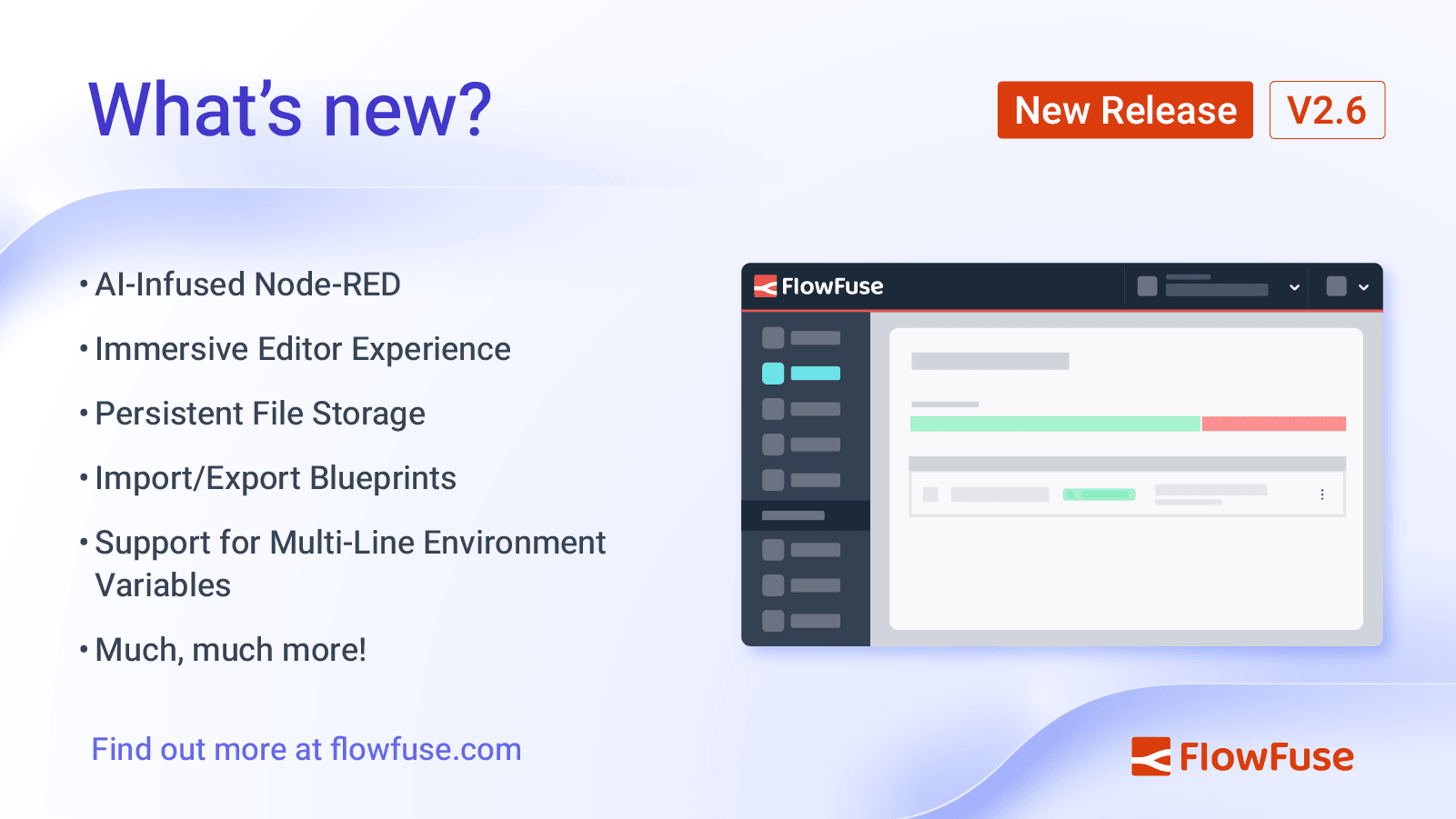
FlowFuse 2.6: AI Infused Node-RED, Persistent File Storage & Lots More
FlowFuse 2.6 is packed with great new features, and in this release we've had a heavy focus on improving the... -
Node-RED Dashboard Formally Deprecated
Dave Conway-Jones, the lead maintainer of Node-RED Dashboard, has just announced that Node-RED Dashboard has been formally deprecated, meaning there... -

Interacting with Google Sheets from Node-RED (2026)
Have you ever needed to integrate Google Sheets with your Node-RED application to track and manage data seamlessly? This guide... -
Multi-Tenancy available for everyone with FlowFuse's Dashboard 2.0
FlowFuse Dashboard has featured multi-tenancy features through the FlowFuse User Addon. This made user based applications available only to specific... -
Node-RED 4: Bringing better collaboration to FlowFuse Cloud
Node-RED 4.0 is the new major release of the project, which is at the heart of all we do at... -
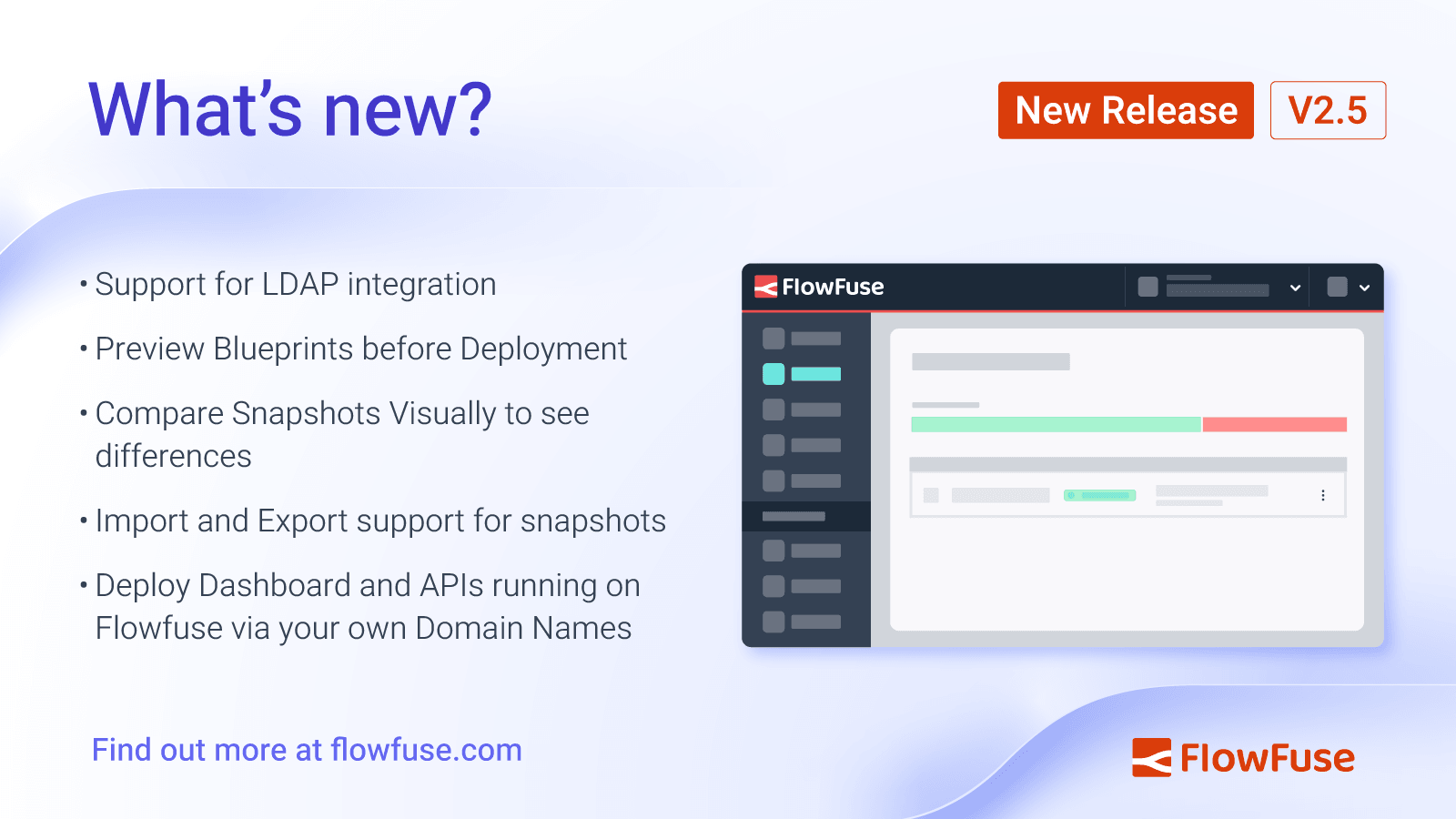
FlowFuse 2.5: New features to visualize snapshots, LDAP integration, and more
FlowFuse 2.5 introduces LDAP integration, snapshot comparison, extends the ability to preview flow to Blueprints, rounds out the management for... -
Working with MQTT in Node-RED: Complete Guide (2026)
MQTT handles the messaging layer for most IoT deployments. Node-RED provides built-in nodes that connect to MQTT brokers, subscribe to... -
Exploring Node-RED Dashboard 2.0 Widgets
This guide delves into Node-RED Dashboard 2.0 widgets. It is a guide on how to build a Dashboard application, and... -

Why you need a low-code platform
Digital transformation is a series of technological advancements that aim to simplify complex tasks. From calculators and graphical user interfaces... -
Product Mission Statement and Strategy Updates
It's now been two years since our first ever 0.1.0 release of FlowFuse. In that time, we've been working hard... -
The MIND stack with Node-RED and FlowFuse Dashboard 2.0
The MING stack has gained significant popularity over the years as it built upon open-source projects. That has given... -
Mapping location data within Node-RED Dashboard 2.0. (2026)
Fleet management in IoT uses sensors and software to collect real-time data on vehicles, such as location, fuel consumption, and... -
Comprehensive guide: Node-RED Dashboard 2.0 layout, sidebar, and styling
In this comprehensive guide, we will explore different layouts and sidebar styles in Dashboard 2.0. Additionally, we will cover how... -
FlowFuse 2.4: making it easier to work with Snapshots, Blueprints & Devices
FlowFuse 2.4 introduces better ways to work with Snapshots, Blueprints, view the content of you flows in FlowFuse, and manage... -
How to Use Variables in Node-RED: Flow, Global, Context & Environment (2026)
Node-RED has four types of variables: message variables that travel with msg through your nodes, and context variables in three... -
Dashboard 2.0: Milestones, PWA and New Components
With a new release of Node-RED Dashboard 2.0 we have plenty of new fixes and improvements being added to the... -
How to Build An Application With Node-RED Dashboard 2.0 (2026)
In this guide, we'll build a Todo application to guide you through the features and explain how you can build...